On this page
- Start with the distinction between rights and evidence
- Build a dossier around meaningful creative decisions
- 1. Preserve sketches and starting materials
- 2. Save drafts that show development
- 3. Explain editing decisions with before-and-after examples
- 4. Track sources, permissions and collaborators
- 5. Document AI use without overstating its significance
- 6. Preserve dated finished versions
- Deposit milestones, not just the final file
- A short checklist before sharing
- Make the record part of the work
- Sources
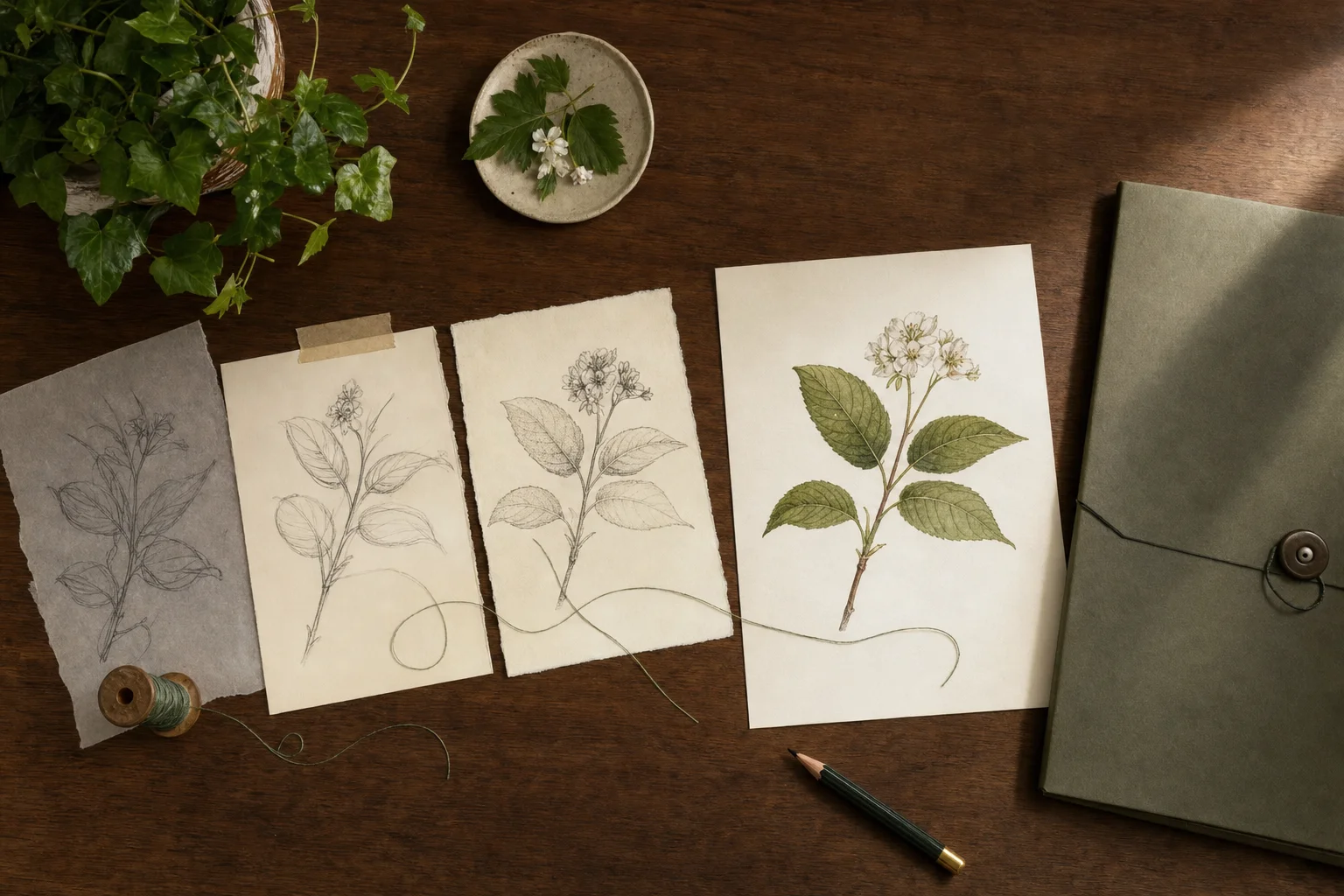
Early sketches and finished artwork show how a creator’s work developed over time.
A finished illustration does not explain why its composition changed. A published story does not reveal the passages you rewrote, the research you selected or the ending you rejected. If you later need to explain your contribution, those missing steps may be precisely what you want to show.
A practical response is to build a creative-process dossier: a selective, organized record connecting your early materials, creative decisions and finished versions.
Start with the distinction between rights and evidence
In the United States, copyright protects original works of authorship as soon as they are created and fixed in a tangible form, such as a document, file or recording. You do not need to register a work for copyright to exist. Copyright protects the way you express an idea, not the idea, method or concept by itself.
AI assistance does not automatically rule out copyright protection. The U.S. Copyright Office requires human authorship: your own creative choices in a work made with AI tools can be protected, while material generated by AI must be disclaimed. A dossier can help you show what you contributed, but records do not turn AI-generated material into human-authored expression.
Evidence and eligibility answer different questions. Records can help explain who contributed what and when a version existed. A dated deposit can support evidence of authorship and the date a work existed, but it does not create copyright or replace registration with the U.S. Copyright Office. For a work first published in the United States, registration or a refused application is required before you can file an infringement lawsuit.
Build a dossier around meaningful creative decisions
Use one project folder and a short index. For each milestone, identify the files, contributors, version, date recorded and relationship to the next stage. Aim for a readable history, not an indiscriminate archive.
1. Preserve sketches and starting materials
Keep early outlines, handwritten notes, thumbnail drawings, melody recordings or initial layouts. Photograph physical materials clearly and retain the originals. Separate your own starting materials from references supplied by clients or collaborators.
Add a brief description of what each item represents. An outline that establishes a story’s structure is more informative when labeled as such than when buried among unrelated notes.
2. Save drafts that show development
Choose versions that reveal a meaningful change: a revised argument, a new visual arrangement, a different scene sequence or a rewritten musical passage. Preserve editable working files alongside accessible exports where practical.
Do not overwrite every earlier version with the newest one. Use consistent filenames and distinguish working drafts, review copies and approved versions.
3. Explain editing decisions with before-and-after examples
Attach short, factual notes to selected changes. For example: I replaced the opening scene, changed the narrator and rewrote the dialogue to reveal the conflict indirectly. Pair the note with the relevant drafts.
Describe decisions embodied in the result rather than making broad claims such as “everything is original.” If you reconstruct an explanation later, label it as a retrospective note rather than presenting it as a note made at the time.
4. Track sources, permissions and collaborators
Maintain a source log for reference photographs, quotations, samples, datasets and commissioned contributions. Record where each item came from, who supplied it and what permission or license supports its intended use. Keep relevant correspondence and license documents; giving credit is not the same as having permission.
For collaborative work, ask contributors to confirm their roles and retain the agreements governing ownership and permitted uses. Keep a contribution record separate from assumptions about who owns the finished project.
5. Document AI use without overstating its significance
If you use AI, record the tool, the task, relevant inputs, selected outputs and subsequent human changes. Where available, retain the tool version or other identifying information. Keep AI-generated material distinguishable from your own writing, drawing, arrangement or editing.
For an AI-assisted illustration, for example, preserve the generated starting image, your redraws, layer files and final composition. Treat prompt histories as context, not as proof that you authored the generated material. Your own creative choices may be protected; AI-generated material must be disclaimed.
6. Preserve dated finished versions
Keep the exact version delivered, published or licensed, together with its project files and delivery record. Distinguish the date you say creation occurred from the dates of export, submission and publication. If you revise the work later, give the revision its own place in the chronology.
Deposit milestones, not just the final file
Consider depositing an initial substantive draft, a major revision and the finished version. Add a short index explaining the relationship between them. Choose milestones that show development or precede an important external disclosure, such as a pitch or client delivery.
Our online deposit service provides a dated certificate for the submitted work, supporting your evidence of authorship and chronology. Keep the certificate with the exact deposited files and your supporting records. The submission date anchors that version in time; earlier creation should be supported by earlier evidence.
A deposit does not create copyright, guarantee protection or conclusively settle authorship. It can strengthen the documented record surrounding your claim, alongside drafts, source files and contribution records. It does not replace U.S. Copyright Office registration before suing over a U.S. work.
A short checklist before sharing
- Preserve an early substantive version and important revisions.
- Link editing notes to identifiable before-and-after files.
- Separate human contributions, AI outputs and third-party materials.
- Retain permissions and collaborator agreements.
- Identify the exact finished version and its delivery history.
- Deposit meaningful milestones and retain their certificates.
- Keep backups and restrict access to confidential materials.
Making your process visible need not mean publishing your private archive. Prepare a concise explanation for clients or partners while keeping sensitive drafts, personal information and confidential source materials access-controlled.
Protect your work by depositing meaningful drafts and finished versions with CopyrightWeb.com. Explore online deposit options and keep your dated certificate with your project records.
Make the record part of the work
You do not need to document every keystroke. Preserve the stages that best explain your contribution, connect them honestly and deposit meaningful milestones. The goal is not to manufacture creativity after the event, but to leave a clear, dated trail of the creative work you actually did.
Sources
Article written with the assistance of AI. General information, not legal advice.