On this page
- The principles behind the permission
- How U.S. copyright law applies
- Which files and versions are included?
- Which AI activities are permitted?
- Who may use the works, and where?
- How long does permission last?
- What triggers payment?
- What reporting makes compliance checkable?
- Connect the license to dated evidence
- Before you authorize: a short checklist
- Make the permission match your decision
- Sources
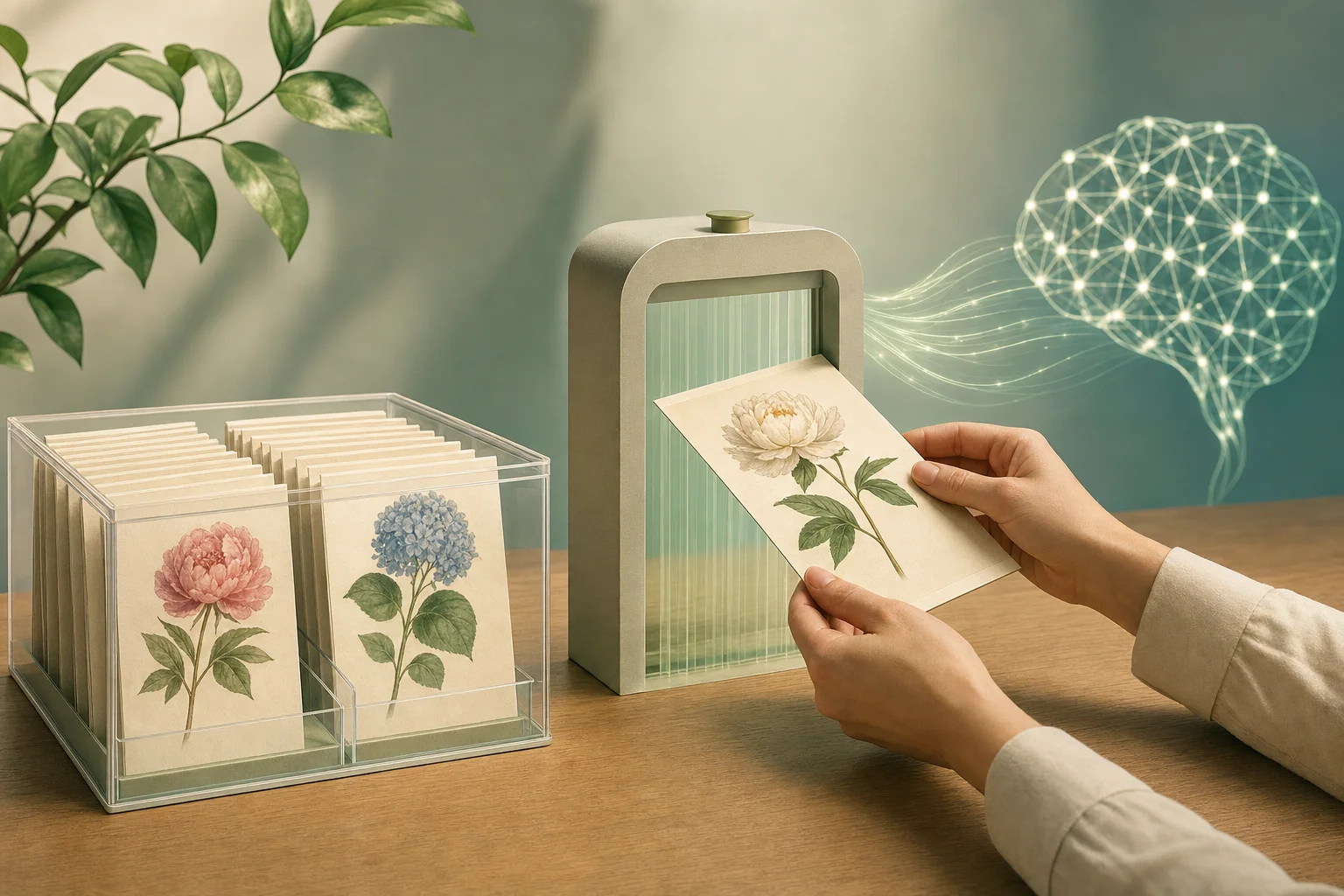
A creator shares one artwork through a limited gateway while preserving dated originals.
A request to license your work for AI can sound straightforward: supply some files, authorize training, receive payment. The real negotiation begins with what each of those words includes—and what happens after the files leave your hands.
Before signing, ask one central question: what exactly would this agreement authorize? Work through the permissions, payment terms and evidence together, rather than treating “AI training” as a complete description.
The principles behind the permission
Under the Berne Convention framework, copyright protection is generally automatic, without registration formalities, as explained in WIPO’s Convention summary. Protection arises when a qualifying work is created, subject to applicable requirements. WIPO’s protection guidance explains that copyright protects original expression rather than underlying ideas, and that some countries require fixation. A deposit records evidence—it does not create copyright.
A license grants specified permissions without transferring ownership of the licensed rights. Where applicable law permits an assignment, it transfers the relevant economic rights. Some legal systems instead distinguish the author’s copyright from transferable or licensable rights of use; moral rights may remain with the author. WIPO distinguishes these arrangements and explains that licenses can have different levels of exclusivity. Ask what rights you retain and whether the permission restricts future licensing.
Authorship and authority to license also need checking. Employment arrangements and previous transfers may affect who controls the rights, as WIPO’s copyright FAQ explains. Review co-authored material and third-party contributions before promising permission over an entire file. Exceptions, moral rights and contractual requirements depend on applicable law; these questions are not a universal legal template.
How U.S. copyright law applies
In the United States, copyright protects original works of authorship as soon as they are created and fixed in a tangible form, such as in a document, file or recording. Registration is not required for copyright to exist. Copyright does not protect an idea on its own, and the U.S. Copyright Office requires human authorship: your own creative choices in work made with AI tools may be protected, but material generated by AI must be disclaimed.
A private, time-stamped deposit can provide evidence of your authorship and of the date the work existed. In a dispute, the party who can prove the earliest date has the advantage. A dated filing with a trusted third party is evidence of that date, but it does not replace registration with the U.S. Copyright Office.
For a work first published in the United States, you must register it—or have your application refused—before filing an infringement lawsuit. Registration timing also matters for remedies: statutory damages and attorney’s fees are generally available only if you register before infringement begins or within three months of first publication.
Which files and versions are included?
Ask for an attached inventory rather than a reference to “your content” or “your catalogue.” Could each item identify its title, filename, format, version, author, rights holder and deposit reference?
For an illustrated book, does permission cover the manuscript alone, or also photographs, illustrations, translations and cover artwork? For a recording, which components are you actually authorizing?
Ask whether drafts, unpublished material, metadata and later revisions are excluded unless added through a documented approval process. Would uploading a replacement file silently expand the license? Request written confirmation of exactly what the recipient receives.
Which AI activities are permitted?
Ask the licensee to distinguish pre-training, fine-tuning and retrieval-augmented generation (RAG). The UK government’s report on copyright and AI describes RAG as connecting a pre-trained model to an external knowledge base to inform its responses. Do not leave retrieval bundled into an undefined training permission.
Would you authorize copying and preparing files, training named models, fine-tuning them, testing performance, or making your works available for retrieval? Does permission extend to generating synthetic training material or developing other models?
Request separate answers about public-facing uses: may the service display excerpts, reproduce images, supply downloads or use your work in demonstrations and advertising? Should any such activity require another agreement?
Also ask what safeguards, attribution or complaint procedures could apply to outputs. Avoid treating a negotiated restriction as a claim that copyright universally protects a style, subject or idea.
Who may use the works, and where?
Which legal entity is signing, and which developers, affiliates, contractors or customers may receive access? Would subcontractors only process the material for the named licensee, or obtain independent permission to reuse it?
Ask whether sublicensing, dataset resale, corporate transfers and distribution of model weights require consent or notice. Which territories cover storage, training and commercial deployment?
Could the agreement name approved recipients, require equivalent restrictions downstream and identify who remains responsible for compliance? Ask a qualified adviser to review governing law, dispute resolution, warranties and liability before signing.
How long does permission last?
Request separate time periods for file access, preparation, training, storage and use of trained models. Does a limited training window come with indefinite permission to operate the resulting model?
Ask what happens at expiry or termination. Must new training stop? What happens to source files, prepared datasets, backups and copies held by contractors? May previously trained models remain available, and on what terms?
Do not settle for an undefined promise to “delete the data.” Request a precise account of the proposed deletion, any treatment of trained models, the verification available and the deadlines. How would renewal, non-payment or a material breach affect each permission?
What triggers payment?
Licensing arrangements can use a lump sum, recurring royalties or a combination, as WIPO’s licensing guidance describes. Ask which structure matches the scope offered rather than assuming that one payment should cover every future use.
Is payment due on signing, delivery, acceptance, ingestion, training or commercial release? What happens if the recipient accepts the files but never launches a product?
For usage-based payments, request a measurable calculation. What counts as a work, training run, model or revenue event? Ask about minimum guarantees, deductions, currency, taxes, payment dates and corrections.
Would additional models, expanded territories, longer retention or new permitted activities require additional payment and approval?
What reporting makes compliance checkable?
Ask for reports tied to the promises that matter. Could they identify the works received, versions ingested, relevant datasets and models, training dates, authorized recipients and payment calculations?
Specify the reporting timetable, format and responsible contact. What records must the licensee retain, for how long, and how would you challenge missing information?
Would an independent auditor be able to examine relevant records under confidentiality protections? Who would pay, and how would discrepancies be corrected? If confidentiality limits disclosure, ask what alternative verification could demonstrate compliance. These are proposed contractual protections—not reporting rights that every creator automatically possesses.
Connect the license to dated evidence
Before delivery, deposit the original works and exact versions identified in the proposed license through our online deposit service. Retain the dated certificate as evidence supporting authorship and documenting the deposited version at that time, rather than as conclusive proof of its original creation date.
WIPO’s guidance on protecting digital works explains that timestamps can show the state of digital content at a given time. Keep the signed agreement, inventory, delivery receipt, approvals and later amendments alongside your deposit evidence.
Cross-reference deposit identifiers in the inventory, and preserve drafts and source files documenting your creative process. The deposit and agreement answer different questions: what work was recorded, and what permission was granted? Keeping them connected helps explain a disputed version, delivery or use.
Before you authorize: a short checklist
- Have the exact works, versions and exclusions been identified?
- Are activities, models, recipients and territories defined?
- Are duration, renewal and post-termination uses explicit?
- Are payment triggers and calculations measurable?
- Can reporting and verification test compliance?
- Are deposited originals, certificates and signed terms stored together?
Deposit the exact originals and versions you plan to license with CopyrightWeb.com and keep the dated certificate with your agreement. Copyright exists from creation; your deposit provides evidence of authorship and the date the deposited work existed.
Make the permission match your decision
Start with the uses you are willing to authorize, then ask for terms that describe them precisely. A carefully scoped agreement, supported by dated evidence of the identified originals, gives both parties a clearer record of what was supplied, what was permitted and what remains outside the deal.
Sources
Article written with the assistance of AI. General information, not legal advice.